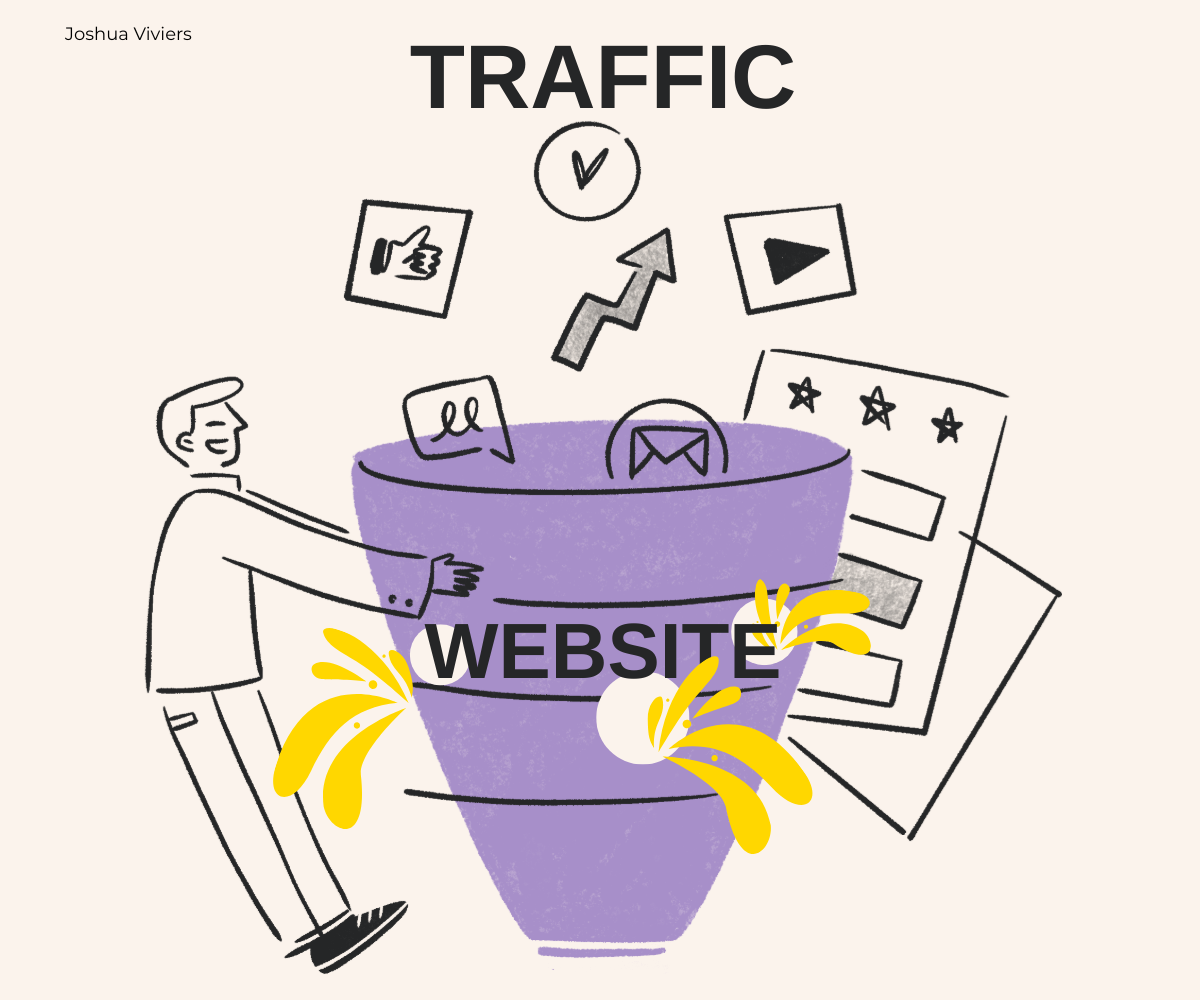
You check your analytics and see a spike that feels like progress.
But then you look at the conversions.
Flat.
No new inquiries. No lift in sign-ups. No meaningful engagement. Just a higher volume of people arriving… and then walking right back out the door.
The default conclusion usually writes itself: “We just need more traffic.” It’s the most comfortable lie in marketing. It feels mathematical. Predictable. Safe.
If 1,000 visitors gave us five leads, then 10,000 will surely give us fifty. But this assumption hides a structural rot in your landing page optimization strategy.
Because traffic doesn’t fix confusion. It amplifies it.
If your value proposition is vague or your headline requires a "cup of coffee" to understand, more traffic just means more people experiencing the same friction. You aren’t correcting the misalignment; you’re scaling it.
Before you redesign, before you tweak your CTAs, and before you throw more money at Google, you need to understand why the "Message–Intent–Trust" chain is breaking.
The Psychology of Website Intent: Understanding Visitor Posture
We treat our websites like a passion project, but your visitors treat them like a nuisance they’re trying to resolve.
As I’ve written before, visitors arrive with cognitive momentum. They aren't "perusing" your site calmly. They are in the middle of a "threat + relevance" scan. Their brain is burning calories trying to figure out if you are the solution or just another tab to close. This is the raw reality of User Experience (UX) friction.
When there is a break in the chain between what they expected (their search intent) and what you showed them (your landing page), they don't "dig deeper" to find the truth. They leave.
Message Clarity: Passing the 5-Second Website Test
Everything begins with the message. Not the font, not the hex codes, and certainly not your "About Us" story.
This is the first point of contact. Within seconds, your message must answer a silent, brutal question: “What is this, and is it for me?”
A strong message names a tangible problem. It anchors your positioning in reality. A weak message is "non-diagnostic."
When you use slogans like “Unlocking Business Potential,” you aren’t being profound; you’re being invisible. Everyone wants to unlock potential. It’s a statement that should be inherently true, which makes it useless for differentiation.
If a visitor has to interpret what you mean, categorize your offer themselves, or guess if you’re a consultant or a software platform, you’ve introduced heavy cognitive load. And in the split-second mechanics of the web, cognitive load is the leading cause of a high bounce rate.
Aligning Content with User Intent
User Intent is usually framed as a technical SEO term, but psychologically, it’s a mental posture. It’s the "Why" behind the click and the foundation of any successful customer journey map.
Think about the difference in posture between these two visitors:
- The Browser: Searching for "How to improve sales." They are in Information Mode. They want to be educated.
- The Buyer: Searching for "B2B Sales Training for SaaS Teams." They are in Evaluation Mode. They want a specific fix for a specific mess.
The "Wrong Fix" happens when you meet a Buyer with a Browser’s message.
If that Buyer lands on your page and you respond with a broad manifesto about the "Future of Sales," you’ve created messaging misalignment. They arrived looking for a specialized tool, and you handed them a philosophical essay. That gap forces the brain to switch gears, breaks their momentum, and sends them back to the search results.
Building Structural Trust (Beyond Testimonials)
We’ve been conditioned to think trust is something you "add" to a site. We treat it like a design element—a testimonial slider here, a "As Seen On" logo bar there.
But those things don’t create trust. They reinforce it.
Trust is structural. It emerges when the page makes sense.
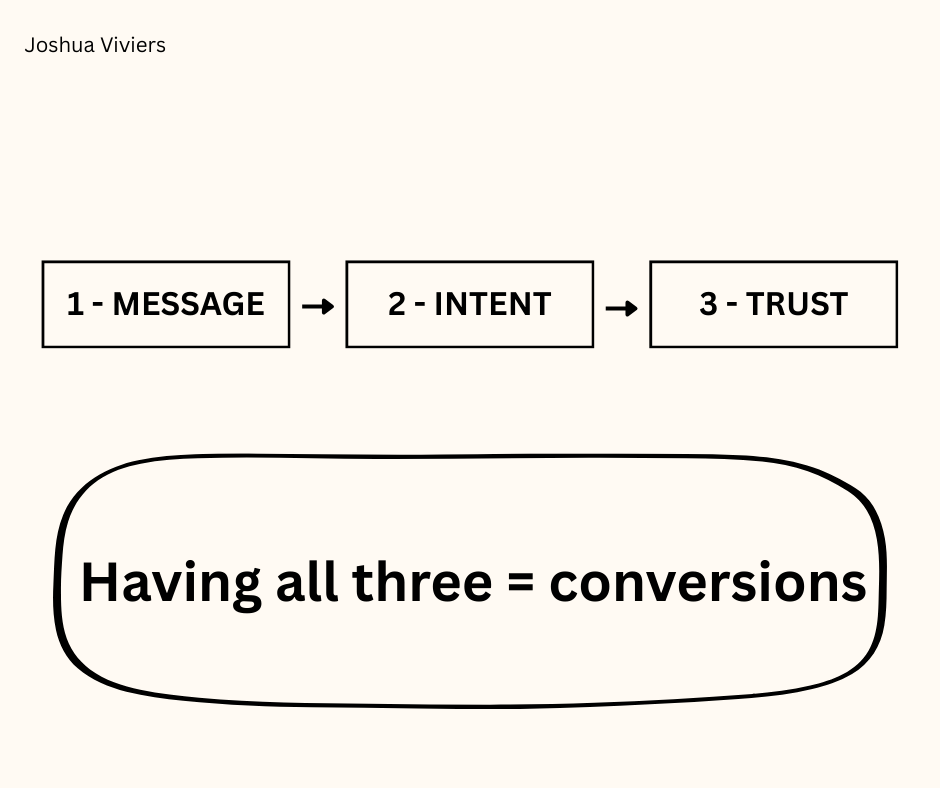
It forms when the headline clearly states what you do, the subheading clarifies who it’s for, and the next section logically explains the mechanism. That coherence is what reduces perceived risk.
Confusion feels unsafe. Even if people don’t articulate it, they feel it. If they have to re-read your copy to understand your offer, doubt creeps in quietly. They think, "If they can't even explain what they do clearly, how are they going to fix my complex problem?"
You can build more trust with a clear, grounded tone and an absence of hype than you can with a hundred fake-looking reviews on a confusing page.
Case Study: Why High-Traffic Pages Fail to Convert
To see how this works in the wild, let’s look at a common failure pattern in B2B conversion strategy.
The Intent: A CEO is frustrated because their Sales and Marketing teams aren't talking. They search for a "Revenue Operations Consultant." They are in Evaluation Mode. They have a headache, and they want an aspirin.
The Site Visit:
- Headline: "Empowering Excellence in the Digital Age." (Abstract/No Anchor)
- Subhead: "We help companies scale through innovative strategies and holistic growth." (Vague/Non-diagnostic)
- The Result: The CEO’s "threat + relevance" scanner returns a zero.
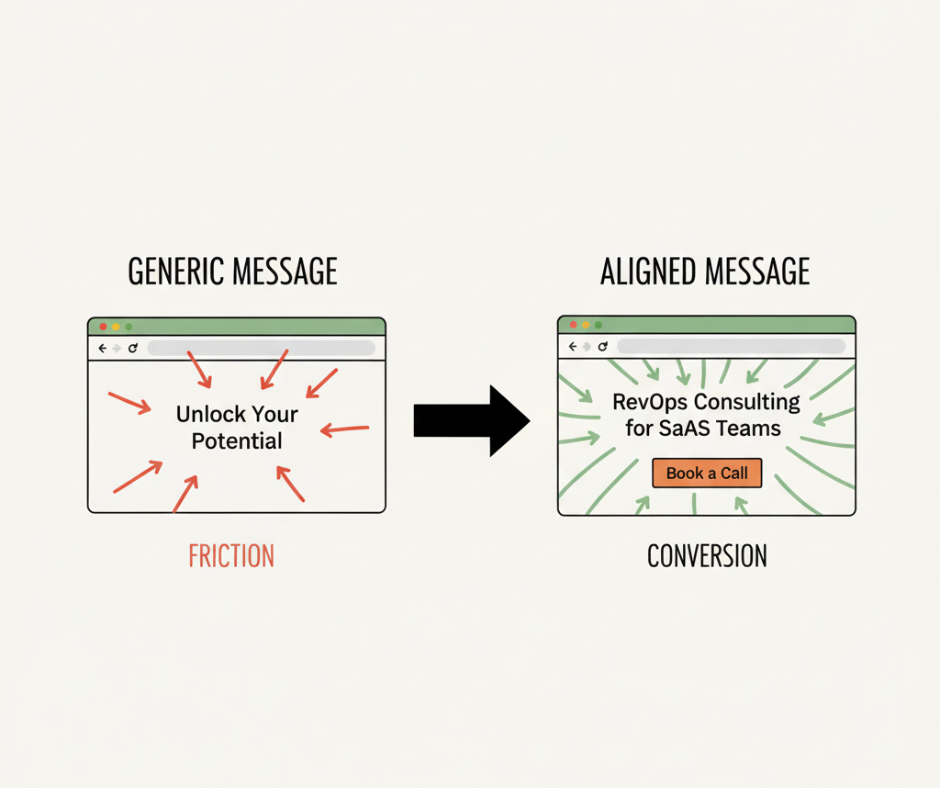
The CEO doesn't think, "I should scroll down to see if they mention RevOps." Instead, they think, "This is a generic agency. Next." Even if that consultant is the world’s leading expert, they failed the 5-second clarity test. The message didn't align with the intent, so the trust chain never even had a chance to form.
Conversion Rate Optimization (CRO) vs. Messaging Alignment
The reason I tell people to stop "optimizing" too early is that Conversion Rate Optimization (CRO) is a multiplier. There is an inherent assumption in A/B testing that your fundamental message is actually landing. But if your fundamental message is a zero, meaning it’s not resonating, no amount of optimization will change the result.
0×100=0
You can obsess over whether a "Join Now" button works better than "Get Started." You can tweak your font sizes until you’re blue in the face. But:
- Optimization is for when the right people are staying, but not clicking.
- Alignment is for when the right people aren't even staying long enough to see the button.
There is no one to optimize for if they’ve already walked out the door. It’s the equivalent of a salesperson trying to close a deal after the customer has already left the building.
Checklist: How to Diagnose Your Website’s Conversion Friction
Before you increase your ad budget because "we just need more volume," run your site through this diagnostic filter:
- The Recognition Test: Would your ideal client see themselves in your headline within 3 seconds, or are you trying to appeal to everyone?
- The Problem Anchor: Does your copy name a tangible, "bloody-nose" problem, or is it filled with flattering, abstract adjectives?
- The Intent Match: If you look at your top traffic sources, does the "posture" of those visitors match the "posture" of your homepage?
- The Friction Check: Are you asking for a high-commitment CTA (like a 45-minute demo) before you’ve even established basic category clarity?
If your headline doesn’t anchor to a real problem, intent weakens. If your flow feels stitched together, trust never forms.
The issue is rarely traffic. It’s coherence.
Diagnosis is quieter and less "exciting" than a total redesign. It doesn't feel like "work" the way tweaking a layout does. But it’s the only work that actually changes outcomes.
Stop painting over the cracks in the foundation. Tighten the chain first.
Stop Guessing at the Foundation
Diagnosis is the first step toward coherence. If you suspect your site is scaling friction instead of conversions, I can help you find the break in the chain.
I offer a 60-minute Entry Diagnostic service designed to strip away the abstraction and give you a clear, structural roadmap to clarity.
TLDR: Scaling traffic to an unclear website doesn't fix sales; it scales friction. Before spending on ads or CRO, ensure your Message matches the visitor's Intent to build structural Trust.
